


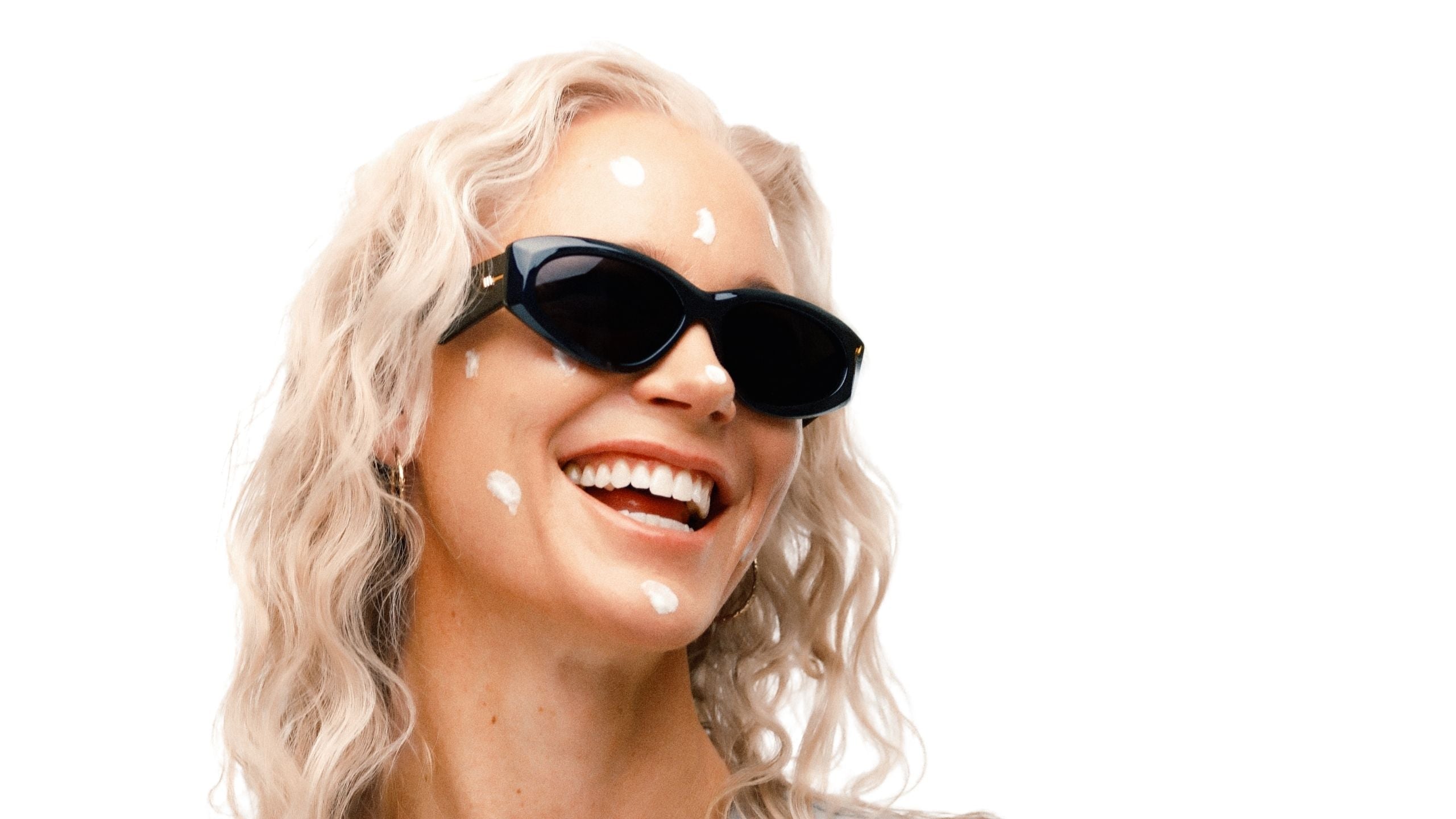
Do you actually need to wear SPF every day?
Yes. Every day. That is the honest answer.
The reason is straightforward. UV radiation causes up to 80% of visible skin ageing. Not stress, not sleep deprivation, not the wrong moisturiser. UV. The fine lines, uneven tone, and loss of firmness that develop over time are largely the result of cumulative sun exposure, including the exposure you get driving to work, sitting next to a window, or walking to get lunch. Cloud cover blocks heat. It does not block UVA rays.
If you are going to do one thing consistently for your skin, this is it. Not a serum, not a targeted treatment. SPF, every morning, in the right amount.
Why most people skip it
Because most SPFs are genuinely unpleasant to wear. The formula that makes your skin look chalky before you have even left the house. The one that breaks you out along your hairline. The one that pills under foundation or sits on top of your skin for the entire day feeling vaguely suffocating.
These are not minor inconveniences. They are the reason SPF compliance is low despite everyone knowing they should be wearing it. The problem is not the intention. It is that the right product has not been found yet.
What to actually look for
Broad spectrum protection. This means the product protects against both UVA rays, which drive ageing and pigmentation, and UVB rays, which cause burning and increase skin cancer risk. A product that only states SPF without specifying broad spectrum is not doing both jobs.
SPF 50 minimum. SPF 30 blocks approximately 97% of UVB rays. SPF 50 blocks approximately 98%. The difference sounds small but it becomes meaningful when you account for the fact that most people apply around half the recommended amount, which brings the effective protection significantly below the number on the bottle.
Fragrance-free. Fragrance is one of the most common causes of skin irritation and has no functional purpose in an SPF. If a formula contains parfum, it is not necessary. Avoid.
Absorbs quickly and leaves no white cast. If a product does not do these things, you will not wear it consistently. The best SPF is the one you will actually apply every day.
What you probably do not need
A high-SPF foundation as your primary sun protection. The amount of foundation most people apply delivers a fraction of the stated SPF. It is not a substitute.
Frequently asked questions
Do I need SPF if I work indoors? Yes. UVA rays pass through glass. If you sit near a window at work, you are accumulating UV exposure throughout the day.
Is SPF 50 really worth it over SPF 30? The percentage difference in UVB blockage is small, but SPF 50 gives a larger safety margin for real-world application, when people typically apply less than the recommended amount.
Can SPF cause breakouts? Some formulas contain comedogenic ingredients that can cause congestion. If an SPF is breaking you out, it is the formulation, not the sun protection. A fragrance-free, dermatologically tested formula should not cause breakouts for most skin types.
How much SPF should I apply? Approximately a teaspoon, or two finger lengths, for the face and neck. Most people apply significantly less than this. Applying too little reduces the effective protection level.
